 Accessing property search services in Lorain County is crucial for homeowners, buyers, real estate professionals, and researchers seeking reliable, up-to-date property records. These services supply essential information about property ownership, assessed values, tax obligations, and land use.
Or
How Property Search Works in Lorain County?
Two main offices maintain property records in Lorain County: the County Auditor and the County Recorder. Each office has a specific role in recording and providing access to property details.
-
Lorain County Auditor’s Office:
The Lorain County Auditor manages records for all real estate parcels, including details about ownership, property values, and tax assessments. Residents can use the office’s online search tool to find properties by owner, parcel number, or street address, making it easy to verify tax status, review property valuations, and see previous ownership records.
-
Lorain County Recorder’s Office:
The Recorder’s Office keeps official documents such as deeds, mortgages, liens, and plats, which are essential for establishing legal ownership and are valuable for title searches and property history checks. The office provides a Public Access (PAX) system for searching by name or parcel number, and users can create accounts to streamline their searches.
Step-by-Step Guide: Parcel Number Search
Step 1: Go to loraincountyauditor.gov. Confirm you’re on the correct site — the homepage should show the Auditor’s office information and navigation links like Search, Map, and Info.
Step 2: On the homepage, locate the Search bar. Or click the SEARCH link in the top-right corner to open the property lookup page.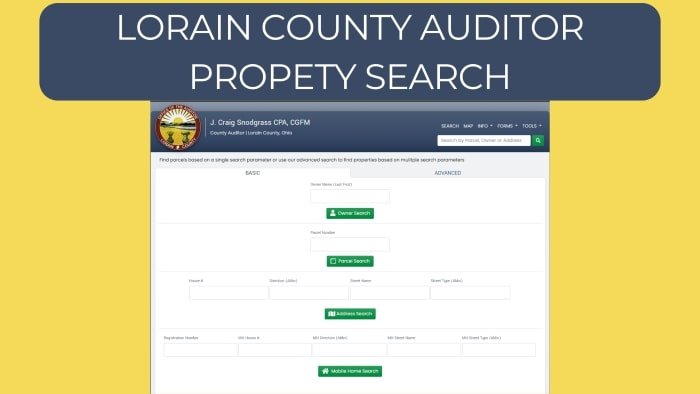 Step 3: In the search interface, choose the option for Parcel Number. This ensures you’re entering the unique identifier rather than an address or name.
Step 4: Type the parcel number exactly as it appears on your tax bill or prior records. Avoid extra spaces, punctuation, or missing digits — accuracy matters here.
Step 5: Click the Search button or press Enter. The system will either take you directly to the parcel record or show a list of results if multiple matches exist.
Step 6: Select the correct parcel from the results. This opens the detailed record page for that property.
Step 7: Check the Owner Name and Mailing Address.
Step 8: Look at the Land Value, Building Value, and Total Appraised Value. These figures show how the property is assessed for tax purposes.
Step 9: Scroll down to see Tax Charges, Payment History, and any Delinquency Notes.
Step 10: Use the Map or EagleView Map options to view parcel boundaries and aerial imagery.
Step 11: Click INFO in the top menu to view forms, exemptions, and policies for splits or plats.
Step 12: Use your browser’s print function or save the page as a PDF. Keep a copy of the parcel ID, ownership details, and valuation for future reference.
Key Features of Property Search!
- Parcel Identification: Each property in Lorain County receives a unique parcel number, which is the most precise way to locate property records.
- Ownership Information: Property searches provide the current owner’s name and, sometimes, list previous owners.
- Tax Assessment Data: The Auditor’s records display the assessed values used for real estate tax calculations.
- Legal Documents: Users can access deeds, mortgages, and other records through the Recorder’s Office to confirm property rights.
- Geographic Coverage: Lorain County covers 923 square miles in total, with 491 square miles of land and a variety of municipalities—18 cities, nine villages, and nine townships.
Practical Uses of Property Search!
- Homebuyers and Sellers: People can verify ownership, search for any liens, and check tax assessments before completing a property sale or purchase.
- Real Estate Agents: Real estate professionals use these search tools to deliver up-to-date market information to their clients.
- Researchers and Historians: Property records are valuable for tracking changes in land use and understanding the history of community development.
- Government and Legal Professionals: Attorneys, planners, and government officials use property information for zoning, taxation, and legal matters.
Both the Auditor and Recorder offices offer online access to property records, making it convenient for residents and professionals to conduct searches. The Recorder’s Office is open for in-person help during standard business hours, usually from 8 a.m. to 4 p.m.
However, online systems are generally the fastest way to search property records, eliminating the need to visit county offices.